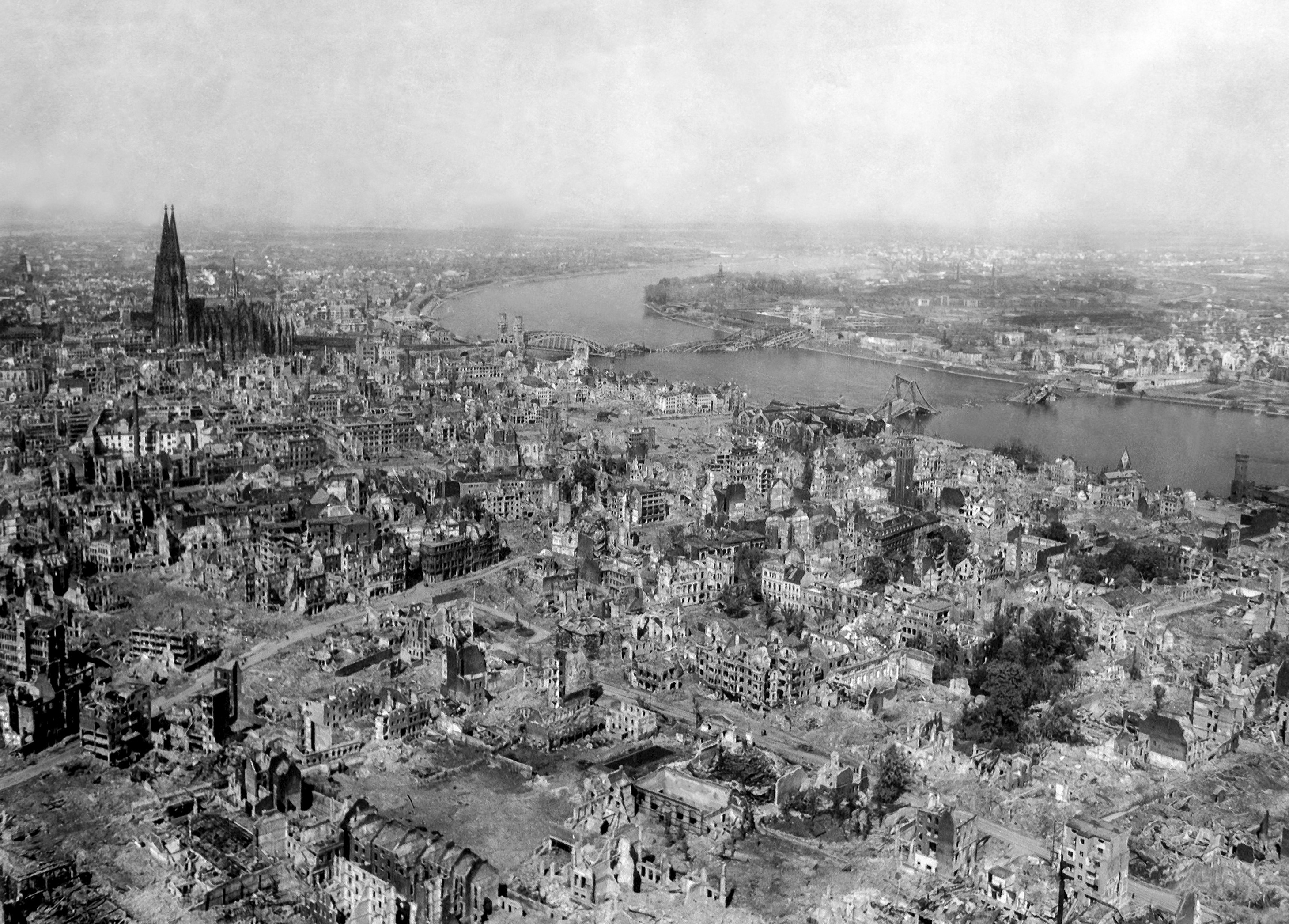
Allied forces inflicted Germany with such heavy damage at the end of World War II that entire cities needed to be rebuilt. Religion also returned with about the same number of Christian worshipers as in the 1920s, so reconstruction of Protestant & Catholic churches accompanied the housing boom… with decoration inspired by current trends. Modern stained glass panels became a common sight in churches throughout West Germany.
●
●
●
As a fan of 20th-century art, I was pleasantly surprised at so much modernity on display in remnants of much older buildings. Then again, my previous trip last year went mainly through what used to comprise East Germany. Four decades of Soviet control diminished the importance of religion there —a great example is the delayed reconstruction of the Frauenkirche in Dresden— and I didn’t notice as many examples of modern stained glass.
I find stained glass sometimes difficult to photograph; I need more practice! But below I’ve put together a compilation of some of the better pics to give an idea of how varied & beautiful this art form can be. Due to so many fine details, I’ve increased the photo size in this post; please be patient if loading takes a bit longer than usual.
Basilika St. Ursula
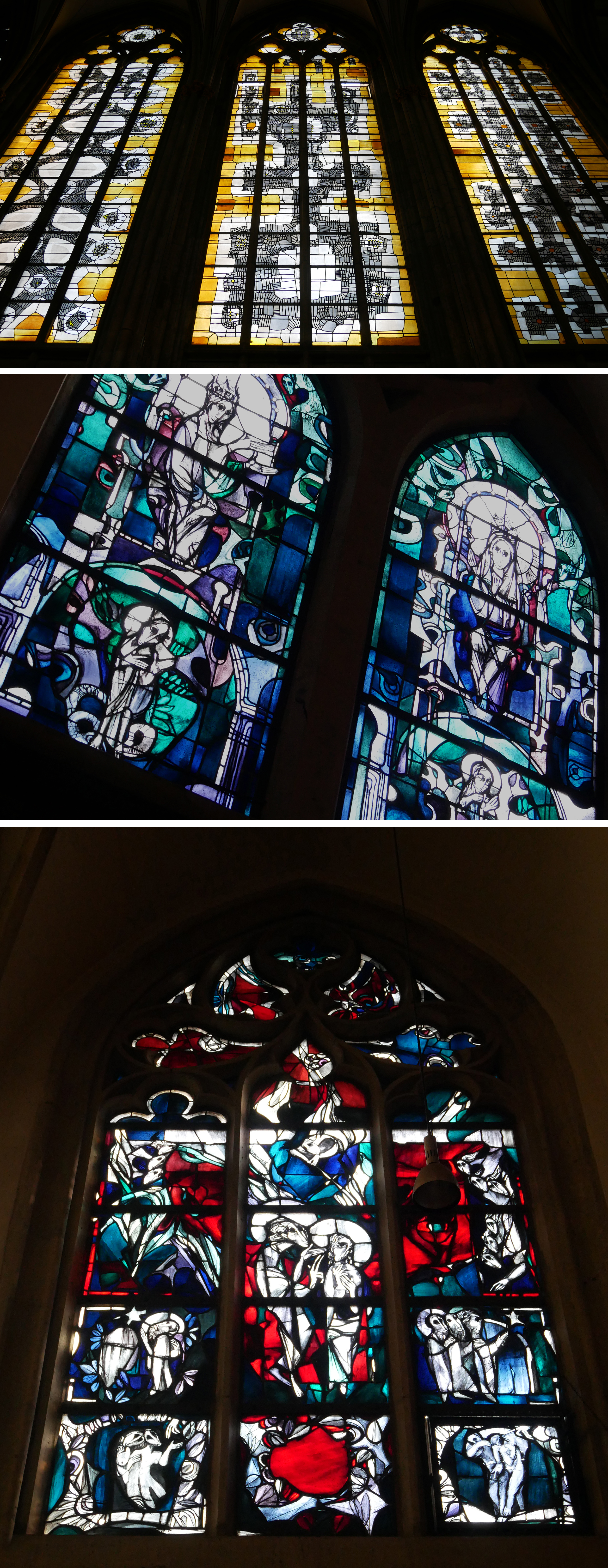
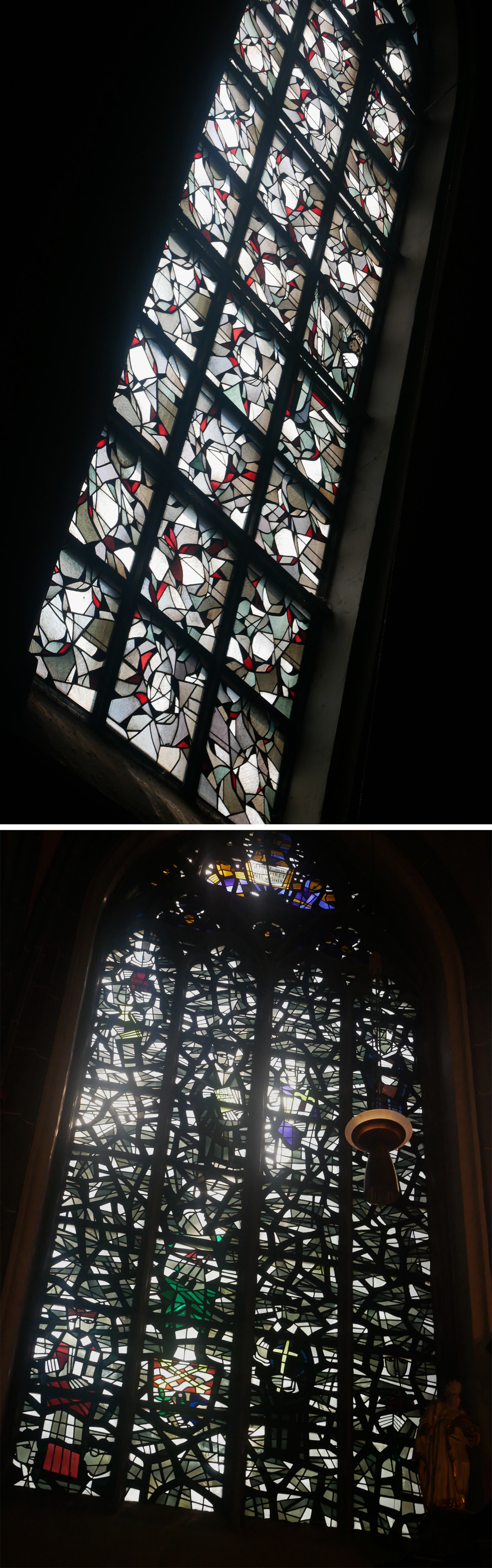
Let’s start with a popular destination in Cologne: the Basilica of St. Ursula. The top panel is from 1962 by Wilhelm Buschulte (1923–2013). He’s known for colorful Expressionist work, but I particularly like the restricted palette here. The remaining two panels are from 1984 by Hermann Gottfried (1929–2015) where Mary is crowned as the Queen of Heaven & Earth + Adam & Eve being expelled from the Garden of Eden.
Groß Sankt Martin
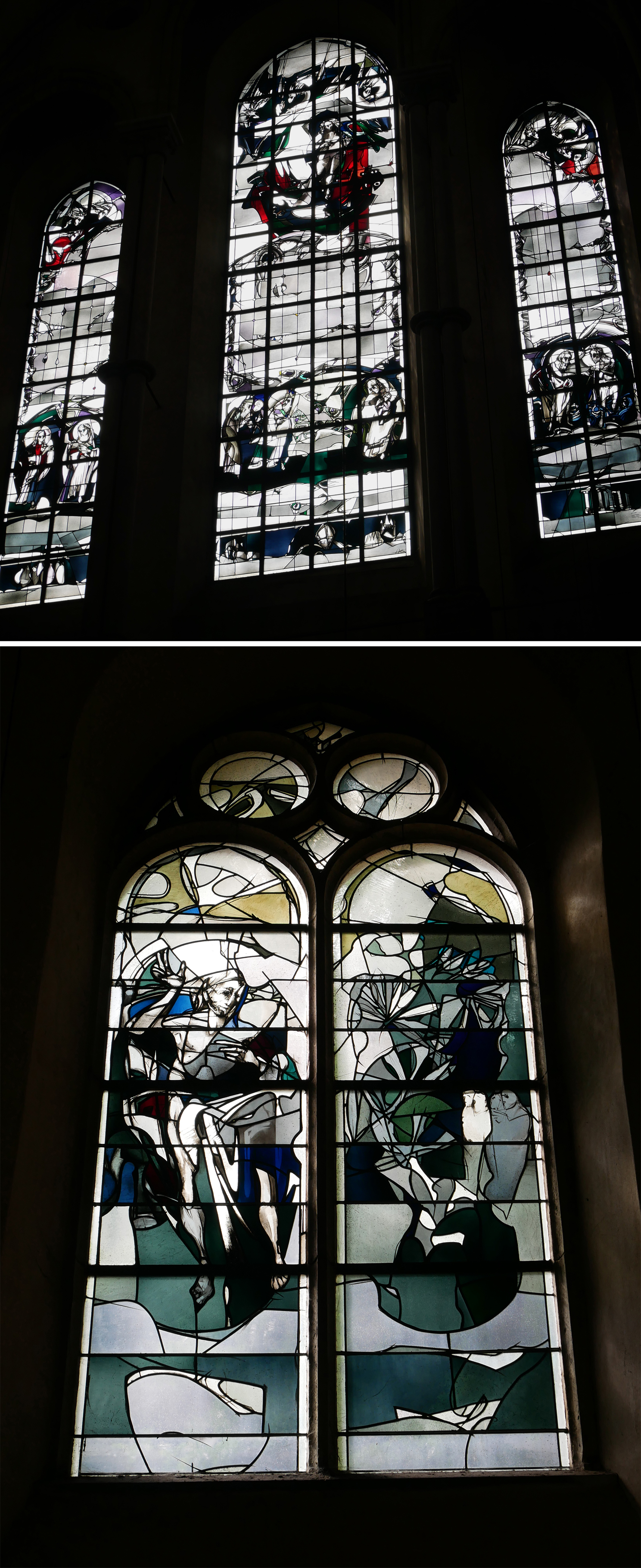
Another Cologne church with 1984 works using broad sheet glass by Hermann Gottfried. The top panel represents scenes from the life of St. Martin while the bottom panel portrays the Resurrection of Christ.
St. Antonius und Benediktus
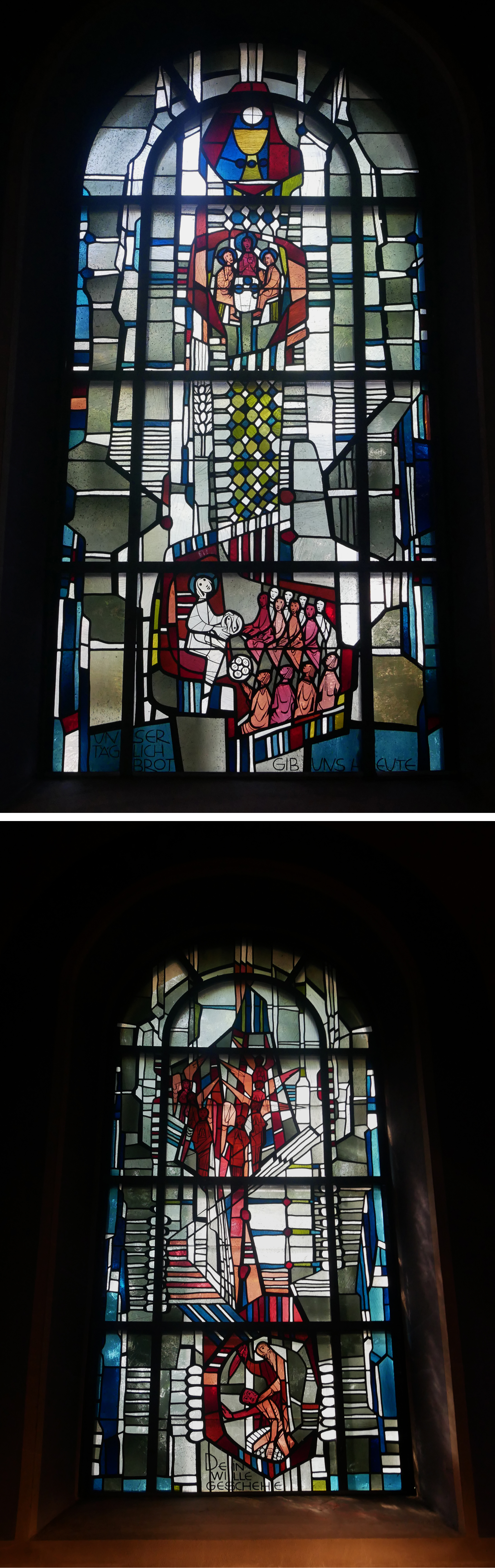
Moving on to Düsseldorf: the top panel is by Ernst Jansen-Wilkeln (1904–1992) placed in 1967 & represents the multiplication of loaves of bread. The lower panel shows seven angels for the seven gifts of the Holy Spirit (wisdom, understanding, counsel, fortitude, knowledge, piety, and fear of God) with the sacrifice of Abraham below. There are many decorative panels here by the same artist, consisting of brilliant red, white & blue color blocks.
Basilika St. Lambertus
Still in Düsseldorf: the top panel is by Ludwig Bahr (1904–1977) placed from 1958–1964, representing the Joyful Mysteries of the Rosary. The lower panel is by Vincenz Pieper (1903–1981) placed in 1961 & features saints with an inscription stating “Go out & teach all the nations.”
St. Maria im Kapitol
Sometimes there’s a building that simply speaks to you. Of course, churches are supposed to inspire but does that always happen? In my experience, not as often as it should. The light that filtered through St. Maria im Kapitol on the day of our visit had a special quality… I remember commenting to Rafa that the place felt deeply spiritual to me. Not something I feel every day! We were glad that the building was not overrun with tourists but also wondered why there weren’t more people inside. I wonder what the original, pre-war structure felt like.
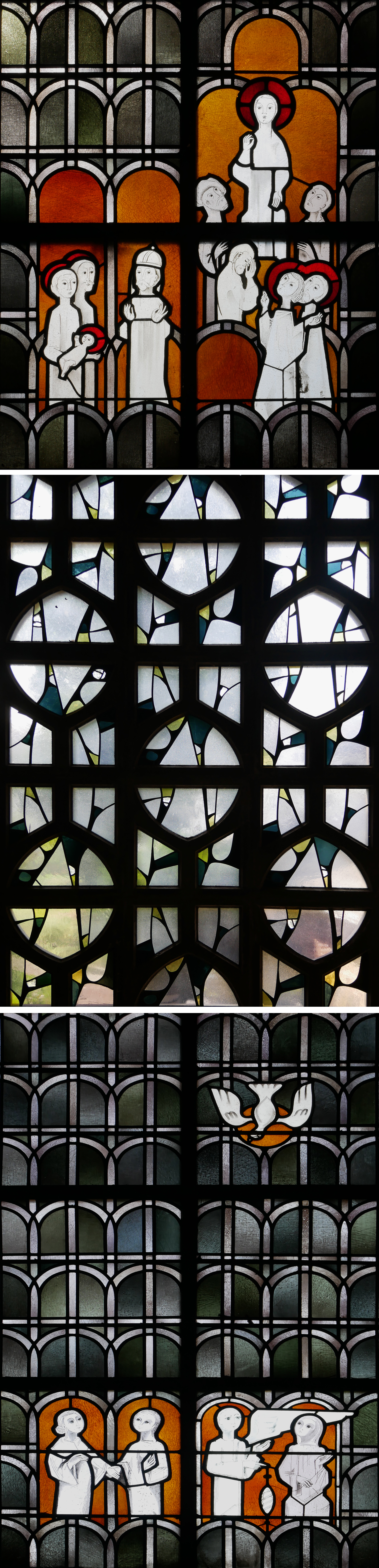
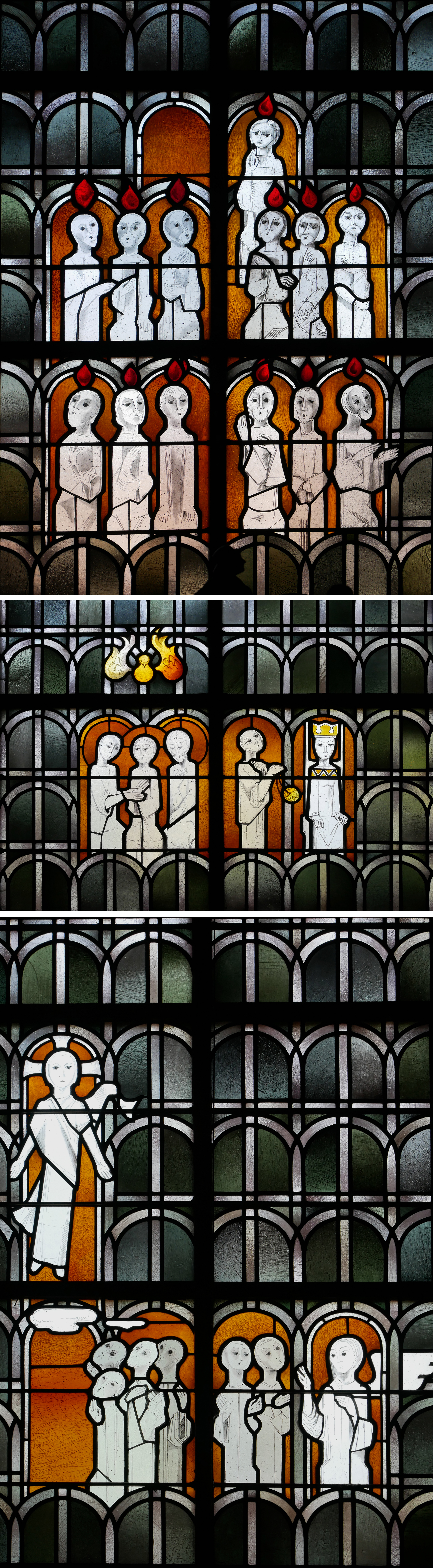
Paul Weigmann (1923–2009) placed these greenish-grey panels from 1984 to 1985 & had an ingenious way of using color. Windows are actually much larger, but I focused on the biblical scenes. Top photo: descent of the Holy Spirit + the Assumption & Coronation of Mary + the Resurrection & Ascension of Christ. Lower photo: the Presentation of Jesus in the Temple & the finding of 12-year old Jesus in the Temple + Annunciation & Visitation. The middle abstract panel above is from the top of the main staircase entrance by Eduard Horst (1893–1966) placed in 1953.
●
●
●
Fortunately scholars & art historians are beginning to spread the word about a modern craft that has been much overlooked by the general public. The below comment by Dr. Iris Nestler about the first artist in this post is telling:
In five decades of artistic work the painter Wilhelm Buschulte has, like many of his colleagues, created a most extensive opus characteristic of the second half of the 20th century. Apart from his numerous drawings and oil paintings, Buschulte produced designs of high quality for more than five hundred cycles of church windows, among them St. Gereon, St. Agnes and St. Ursula in Cologne, windows in Aachen Cathedral, and windows for buildings in Cairo, Beirut and Riyadh.
Yet Buschulte’s opus remains unknown in public art history discourse – a fate he shares with his colleagues in stained glass painting. An incredible quantity of glass paintings in Germany’s churches, though familiar to the church-goer and known to the research specialist, was not included in even such important survey exhibitions as the 1999 Berlin one, “A Century of Art in Germany”: not one artist from this genre, not even Johan Thorn-Prikker.
I love when people found organizations to promote & preserve national heritage. Information on the Research Center for 20th Century Stained Glass (Forschungsstelle Glasmalerei des 20. Jh. e.V.) website has been of great value for this post as well as for future trip planning. Thank you, Ernst & Annette Jansen-Winkeln, for establishing the European Academy of Stained Glass Foundation!
Header photo credit: U.S. Department of Defense. Department of the Army. Office of the Chief Signal Officer. ARC Identifier: 531287; U.S. Defense Visual Information Center, photo HD-SN-99-02996. Downloaded from Wikimedia Commons.