buenos aires
buenos aires: stencil graffiti 2004

In a previous incarnation of this blog, over 500 images of stencil graffiti were posted… most of them found in Buenos Aires. Although the glory days are gone —stencils have since been replaced by other types of street art— many of those images provided a social outlet for fed-up people in the aftermath of the 2001 crisis. Messages ranged from social commentary to advertisements to political activism. Naturally, I don’t necessarily agree with all the opinions of the artists, but disagreement is not a bad thing. A lack of expression for dissent is much worse. Spray on.
Read More »buenos aires: stencil graffiti 2004buenos aires: ciae bibliography
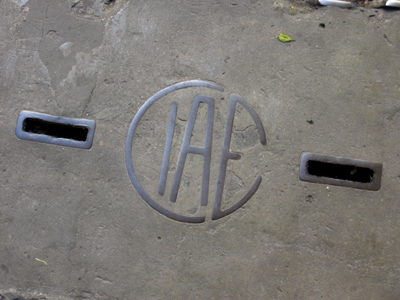
Over the last month, I’ve read more about the Argentine electricity sector than I ever thought possible. Two things surprised me most during this investigation: a large amount of misinformation across the board & huge gaps in scholarship. Fact checking does not seem to be very important nor does consulting original sources, so errors propagate throughout books & journals. For example, something as basic as the year a company was purchased or the amount of time a concession was extended should be easy to verify. I’m not writing a thesis, but it’s difficult to form opinions with so much misinformation floating around.
Read More »buenos aires: ciae bibliographybuenos aires: ciae building list / inventario
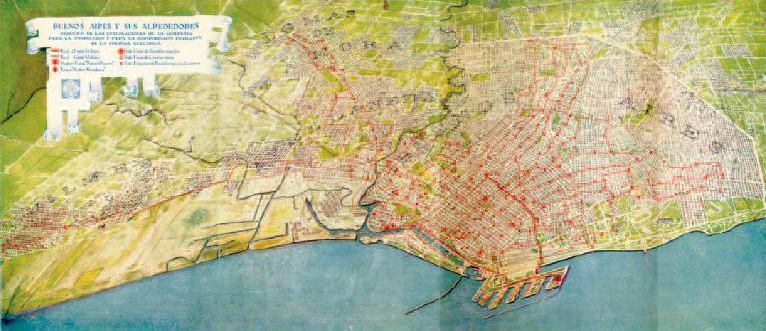
A list of all buildings which once belonged to the Compañía Italo-Argentina de Electricidad must exist somewhere in old company archives. But after being absorbed by SEGBA in 1979, it’s anyone’s guess as to where that list may be. And how many of those structures have been demolished since then? Reading & researching the CIAE’s crazy history over the past month, I also noticed that there is no online source dedicated to the CIAE. That needs to change.
Read More »buenos aires: ciae building list / inventariobuenos aires: ciae, fade to black
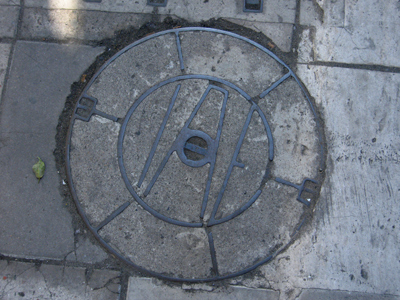
The 1940s presented a series of new problems for the electricity sector. Perón’s dual policy of fixing rates & massive industrialization led to demands the network was unable to meet. To overcome problems & oversee supply, the ministry Agua & Energia de la Nación was created in 1947. Soon followed a 1949 constitution clause to nationalize all public utilities. Perón never followed through with nationalization, but the idea had been planted firmly in everyone’s mind.
Read More »buenos aires: ciae, fade to black